
2075 Climate Worker Uniform
The following is a transcription of an interview with a 2075 climate worker:
“So as it turns out the greatest solution to the kaleidoscopic climate crisis was not something we were waiting to invent, not solar power, bio-remediation, or divesting from fossil fuels and the global war machine. Or rather it wasn’t any one of those things, it was all of them. By removing those obstacles we opened up space for the creative power of working people to blossom. Once we took care of everybody's needs. It freed them up to imagine how to solve the ecological catastrophe we had all inherited.
Most of the solutions are unglamorous. They are slow and frankly sometimes kind of boring. I trained as a welder and machinist, but even before the global ceasefire I refused to make munitions. So instead I spend my time making farm equipment and encouraging farmers to grow carbon sequestering ground cover.
My tractor attachments cut a thin strip in the groundcover and allow farmers to grow vegetables with minimal disturbance to the soil. I started just by working with nitrogen fixing Dutch White Clover, but as time passed I began to play with it, to cross breed it with sweet smelling mugwort and indigo plants.
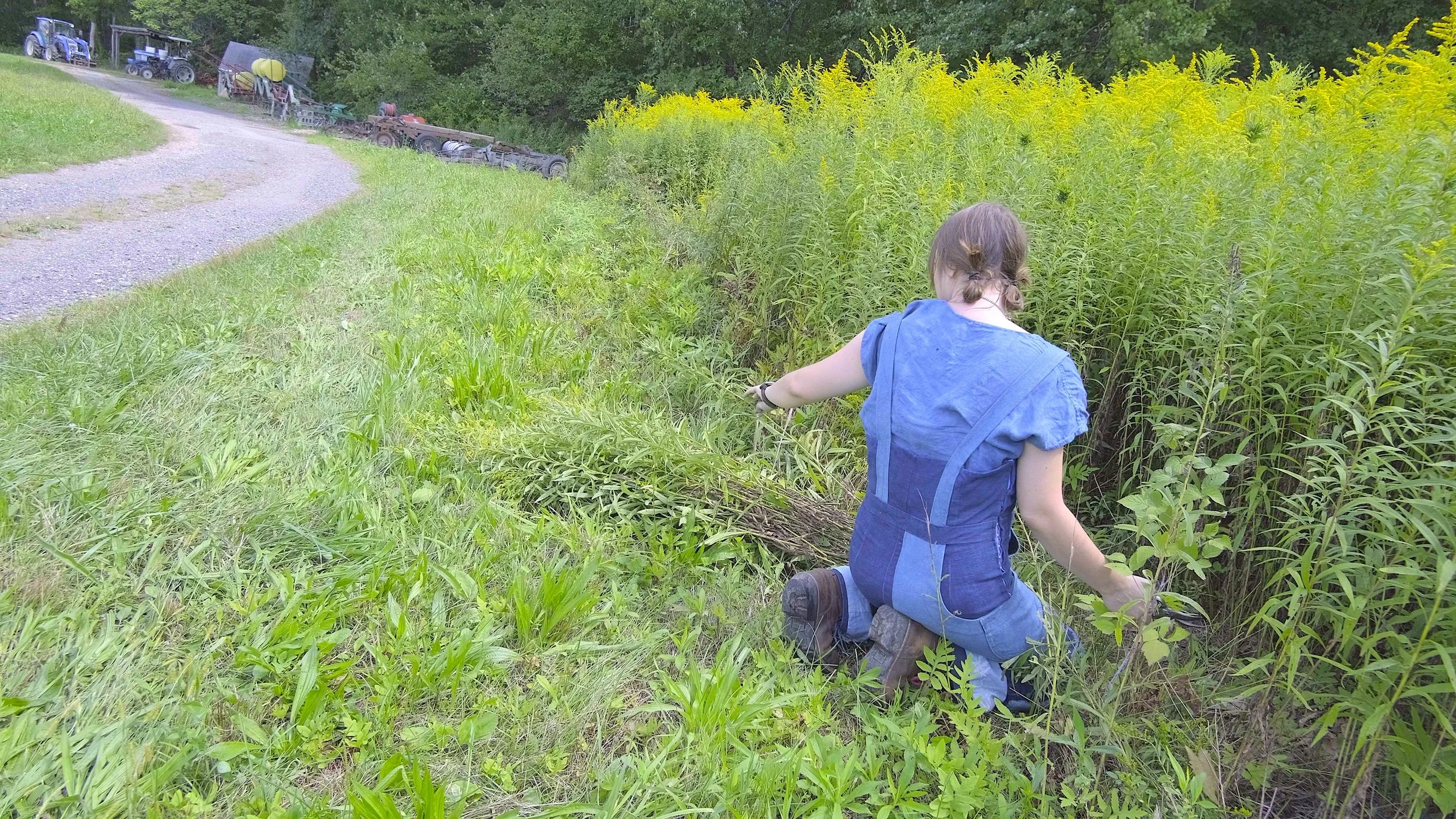
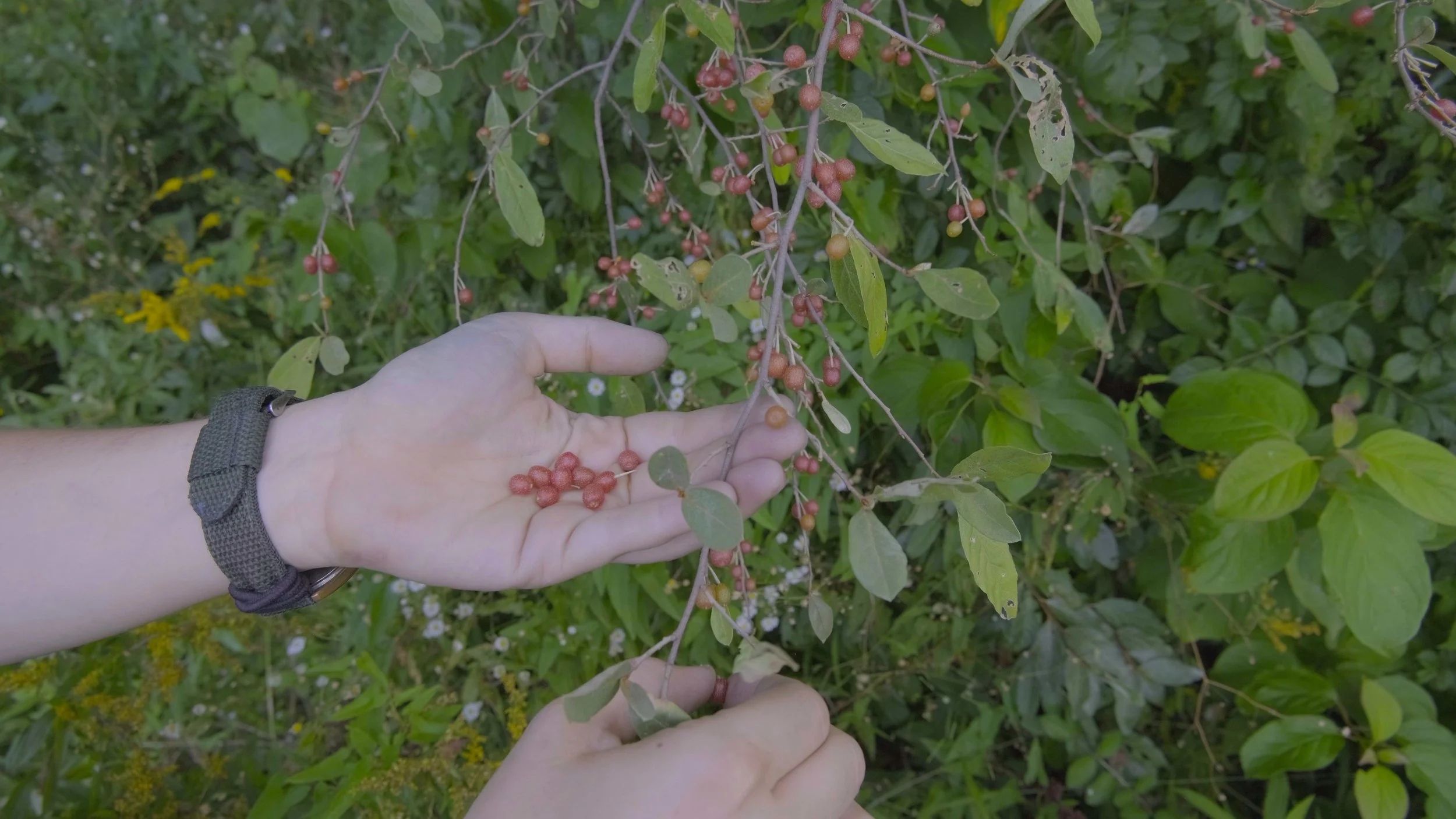
All of that takes less than ten hours a week. I spend some of the remaining time examining the eco tones around the fields. These barrier zones are filled with disruptive plant species that can crowd out more beneficial ones.The seeds of some of these plants, particularly bittersweet vine, are incredibly difficult to dispose of. That plant has a long rich history of being turned into protective clothing and objects by the Ainu Peoples of Japan, but it is displaced and far from home, it is prone to taking over fragile barrier zones and turning them into a monoculture. I tried working with goats and controlled burns but what with the bio accumulation and drought and wildfires and I had to change tactics. So I sewed up these protective overalls and heavily dyed them with my mugwort/ clover/ indigo hybrid to protect me from the small flying insects and the bad dreams that haunt these waste spaces. The images on the ribbons that wrap around my ankles are representations of the hybrid plants that I work with. They are done in the style of the Deerfield Blue and White Needlework Society. Those folks were fantasizing about new combinations of plants and embroidering them over 100 years ago in this very valley.
I made knee patches quilted with a thin layer of silk and milkweed mugwort and indigo seeds, so as I remove disruptive bittersweet vines my pants become torn and I spread the seeds of more beneficial plants.
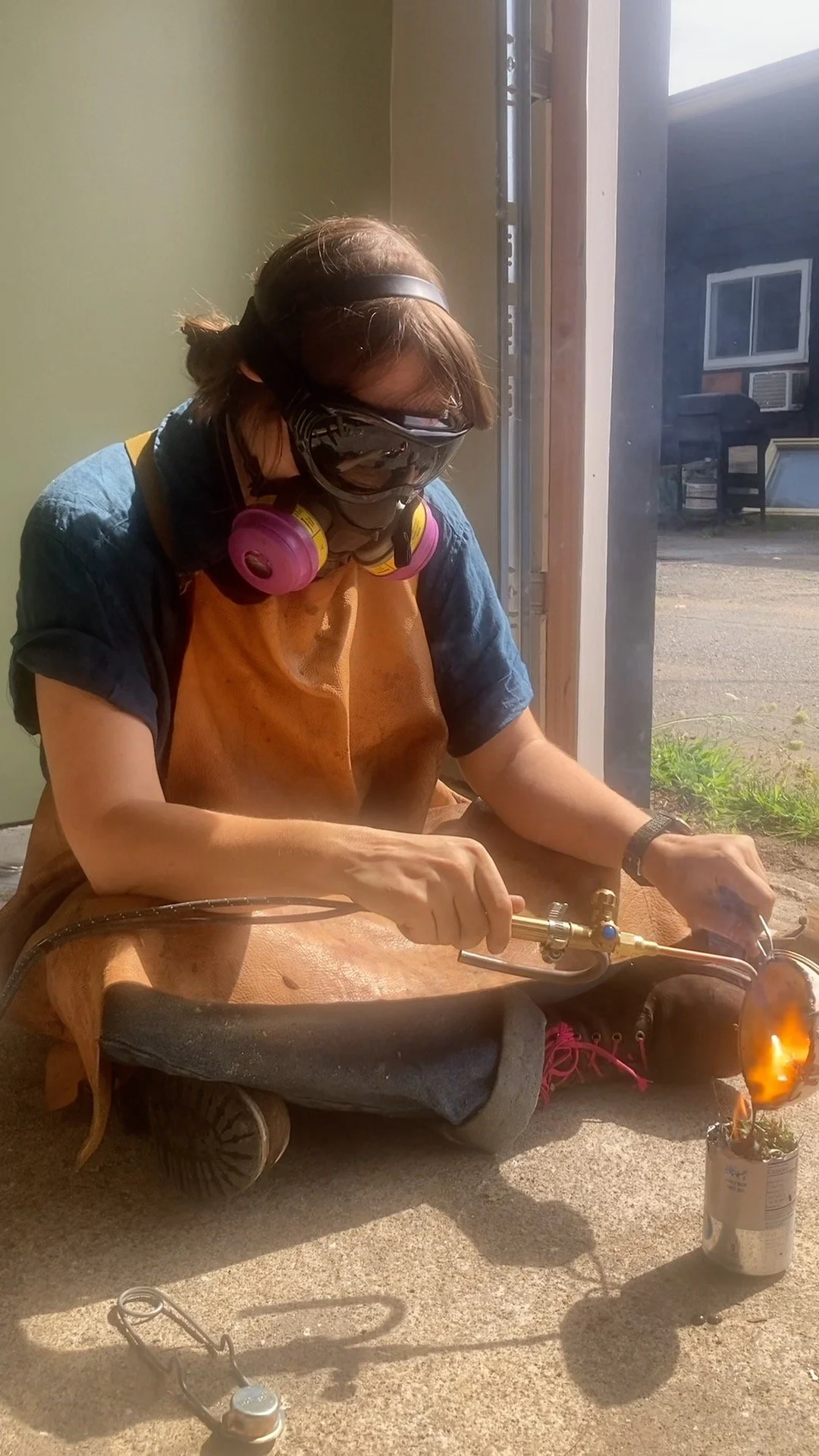
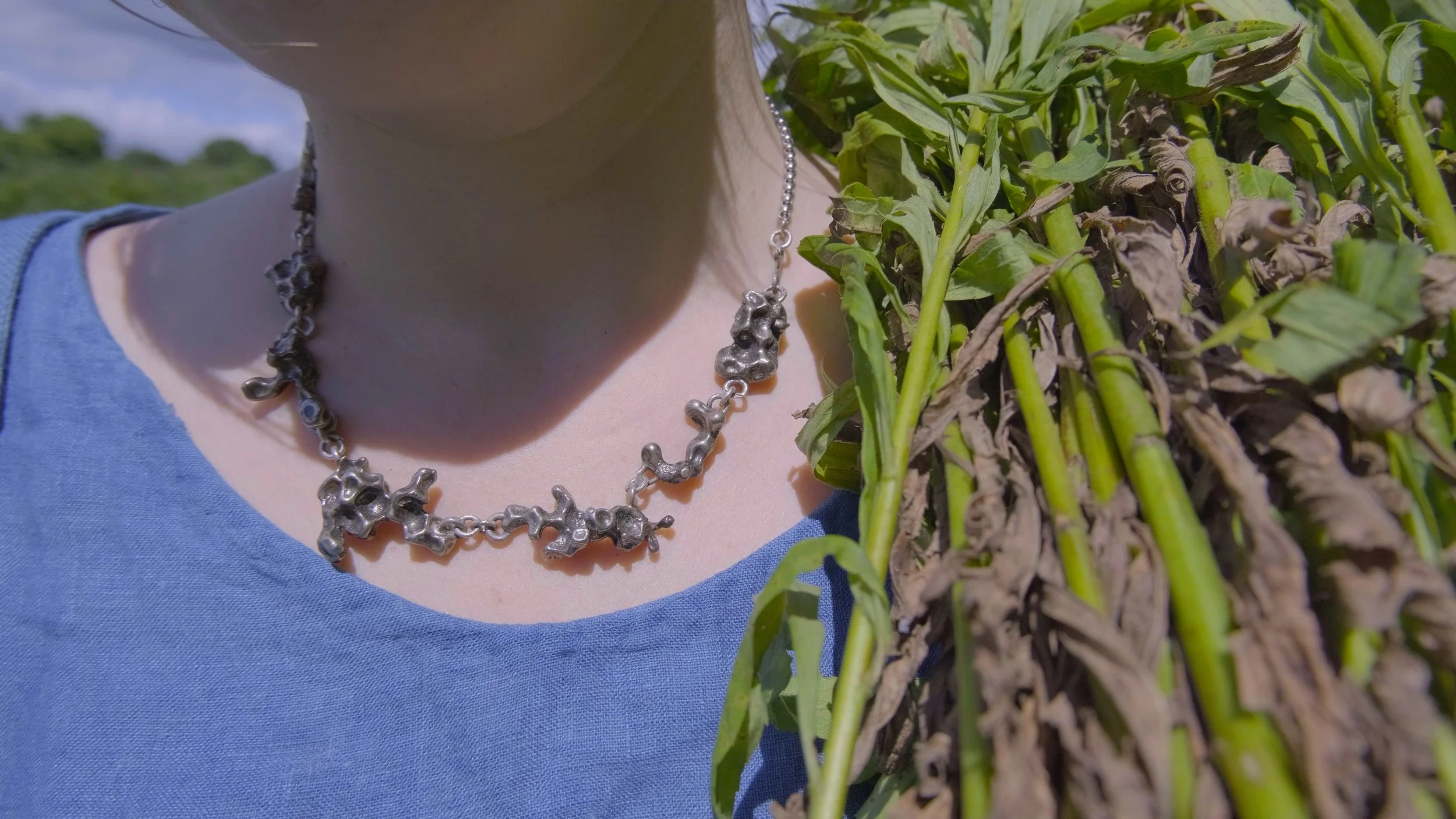
I gather up the seeds of disruptive bittersweet vines and prevent them from sprouting, I pour molten metal on them. I then turn the molten metal lumps into talismans I can keep on my body- to help me remember the weight of the task I am undertaking.”
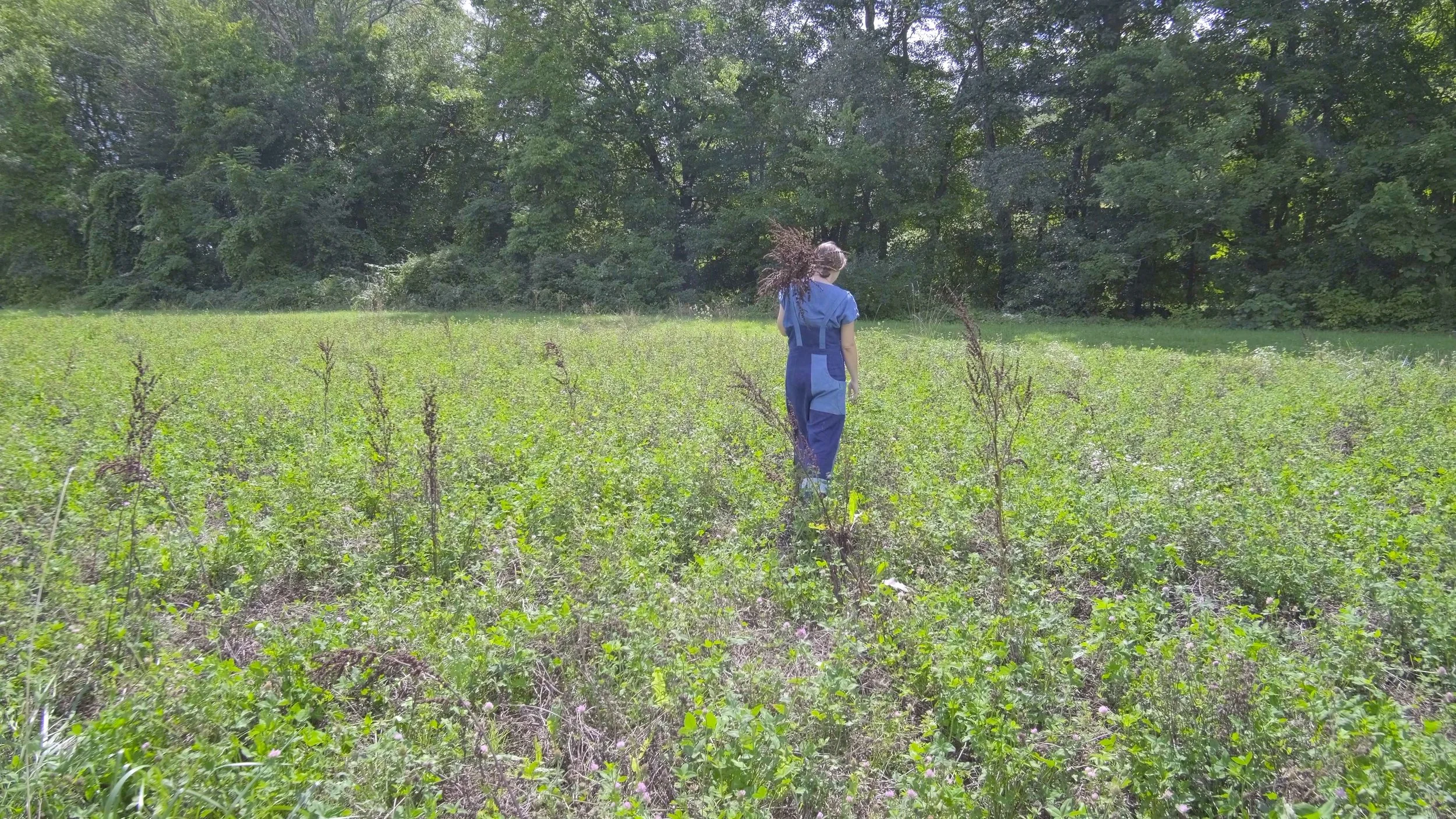
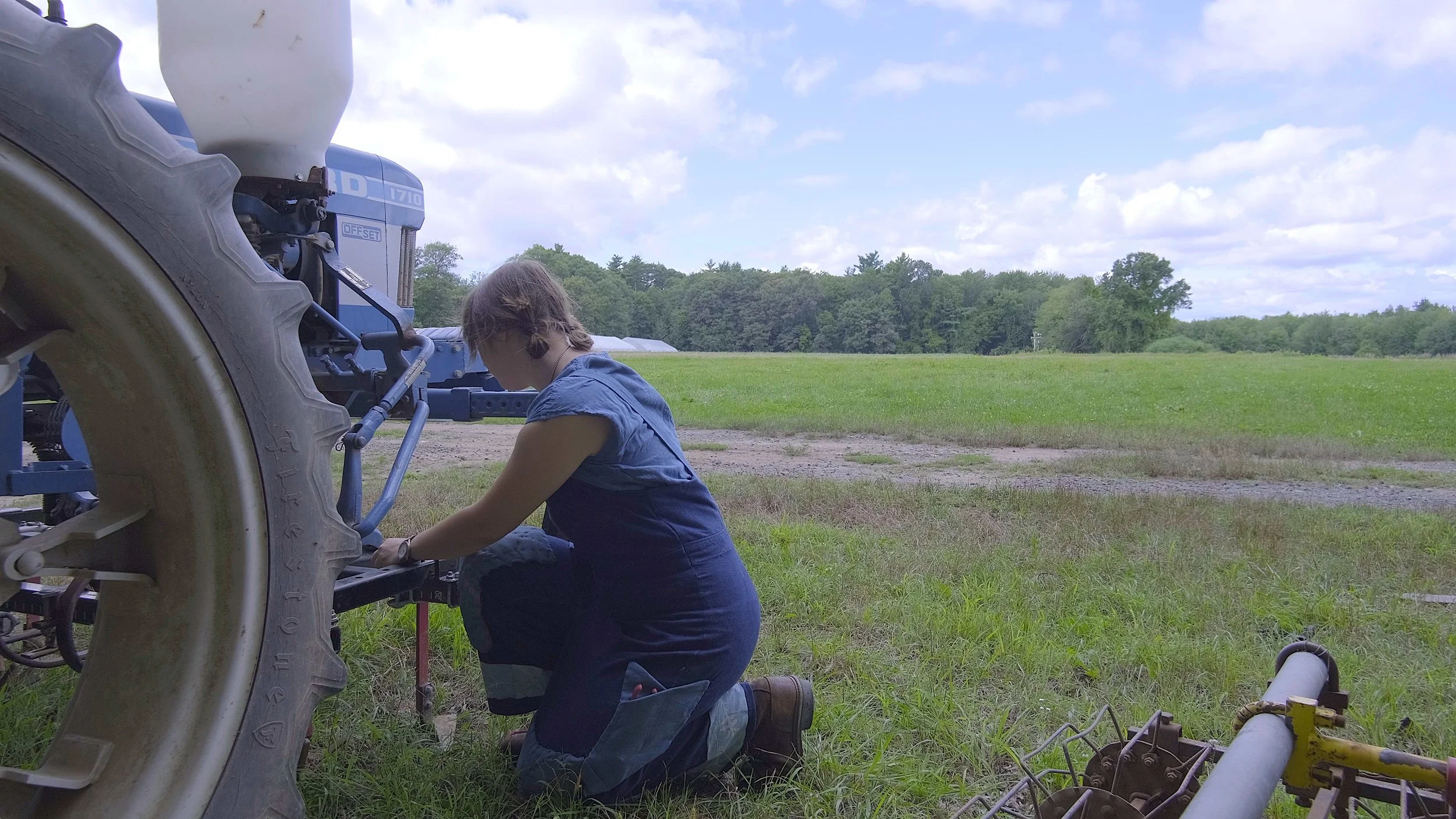
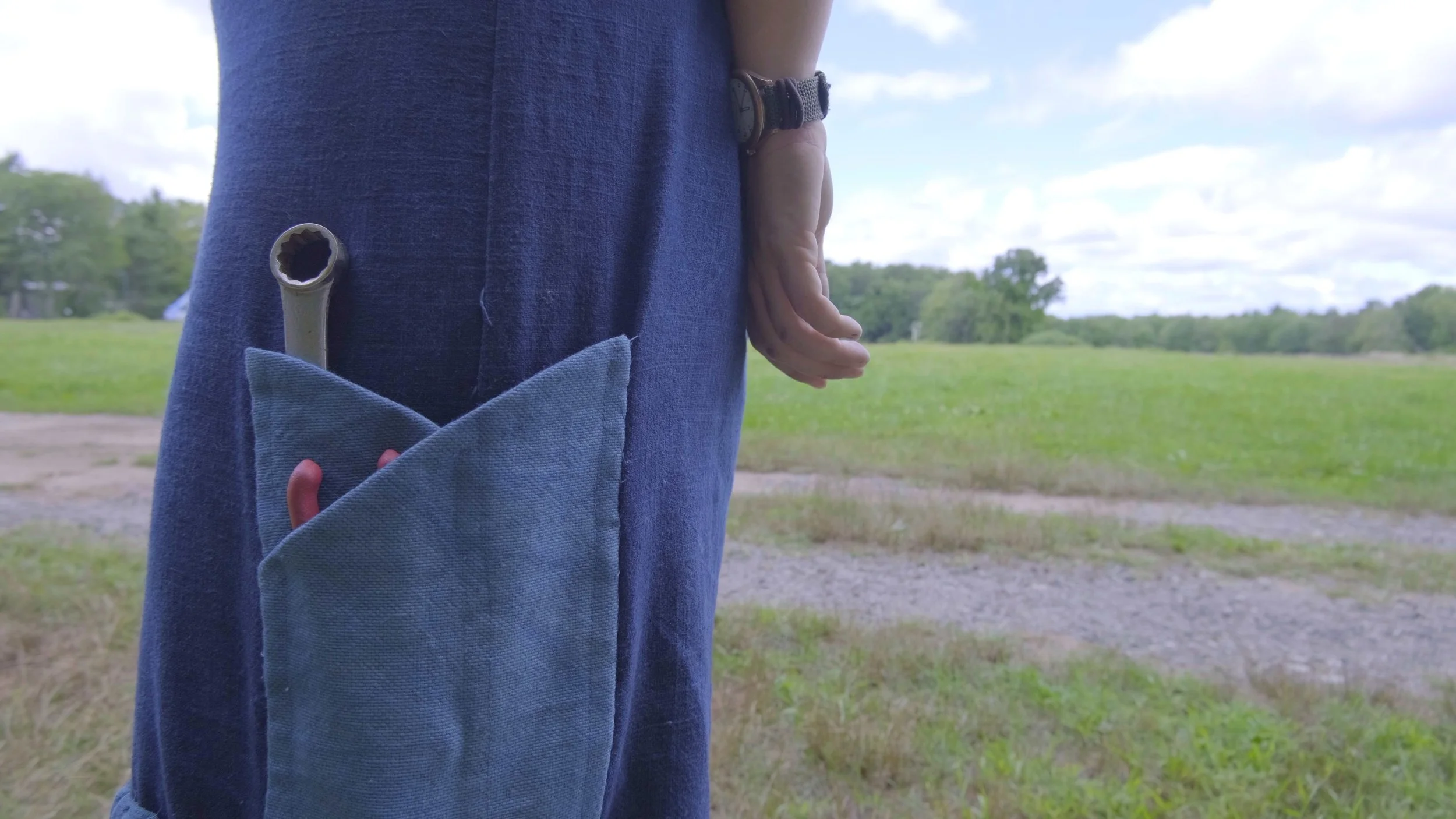
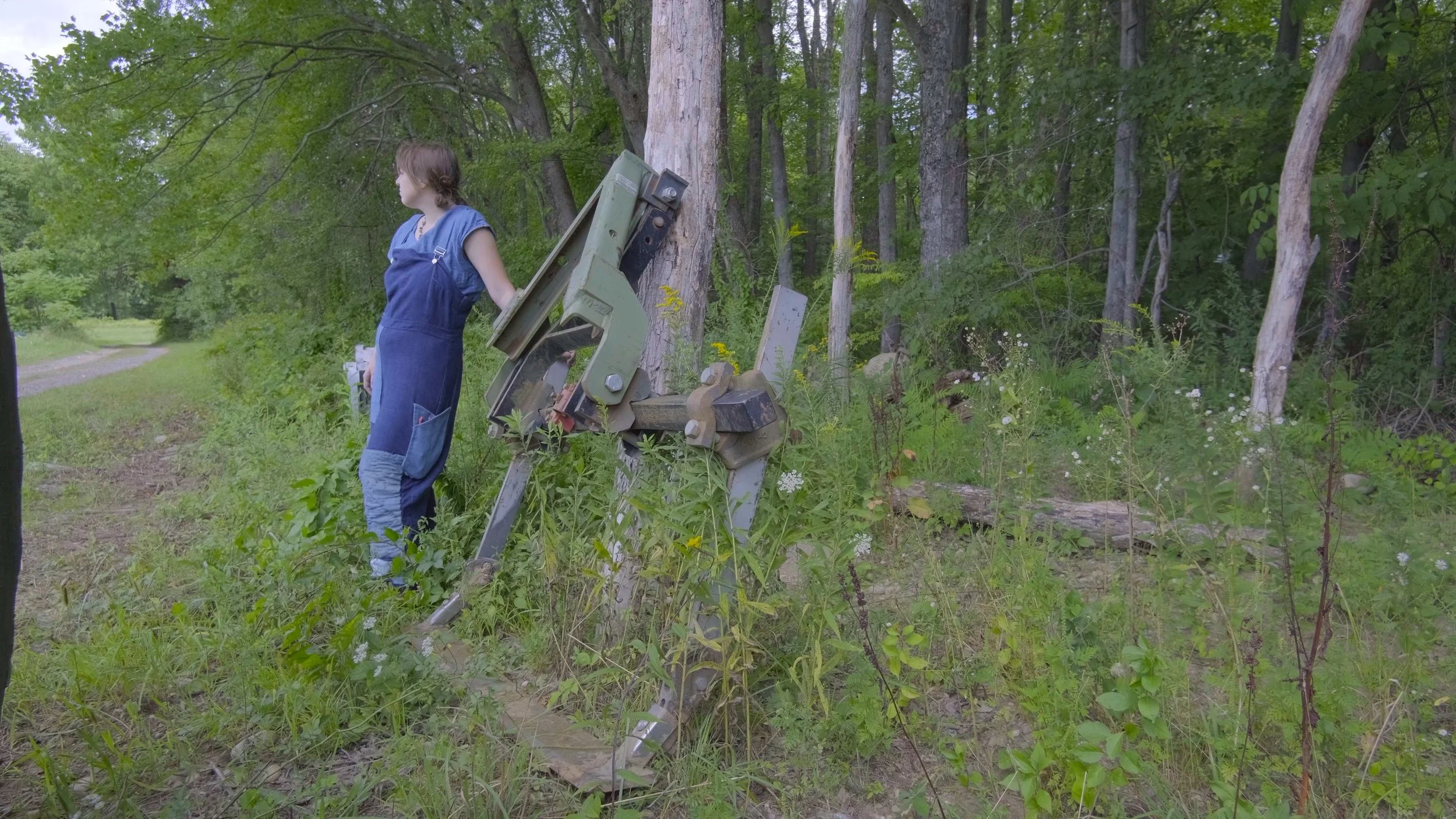
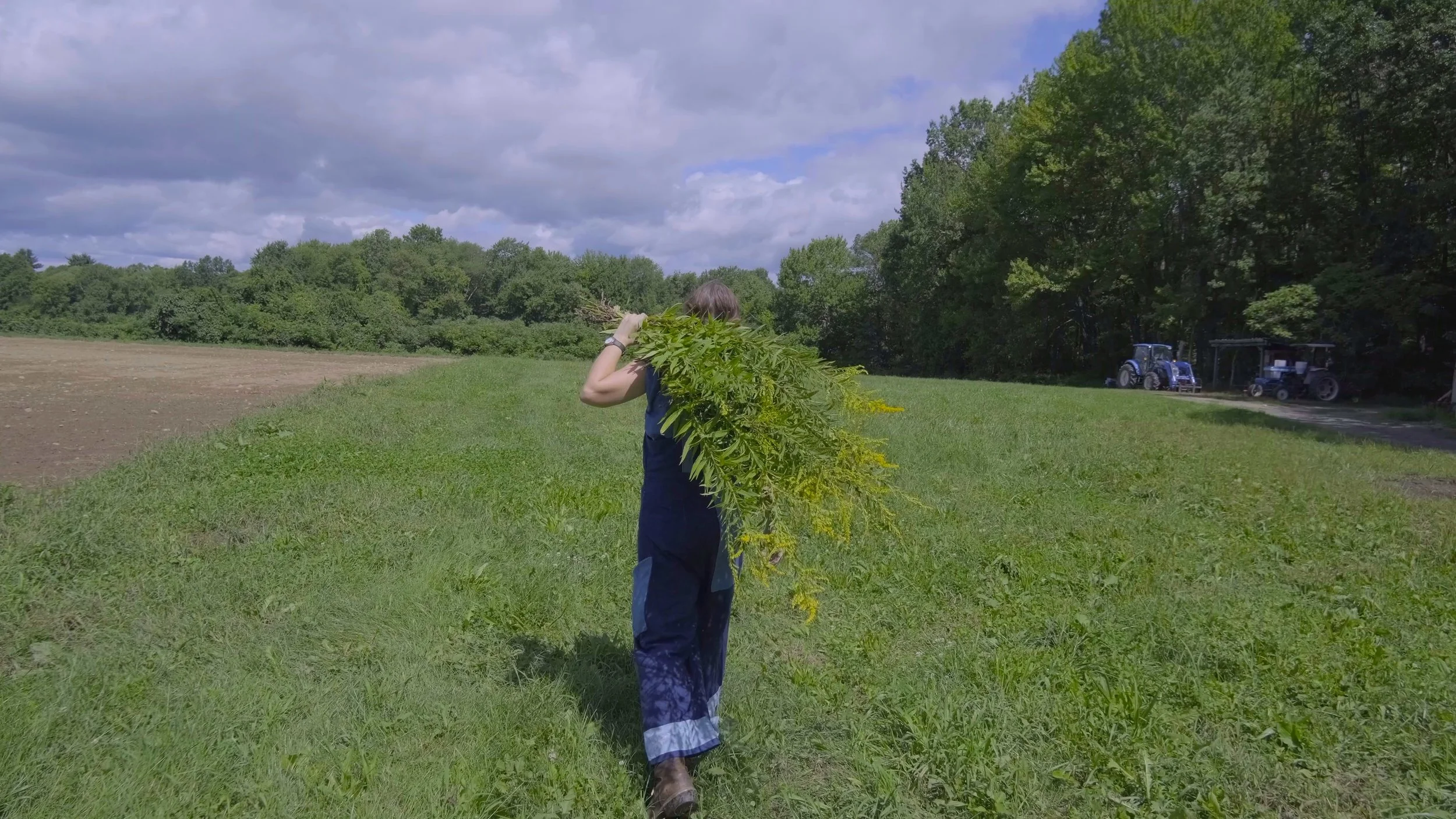
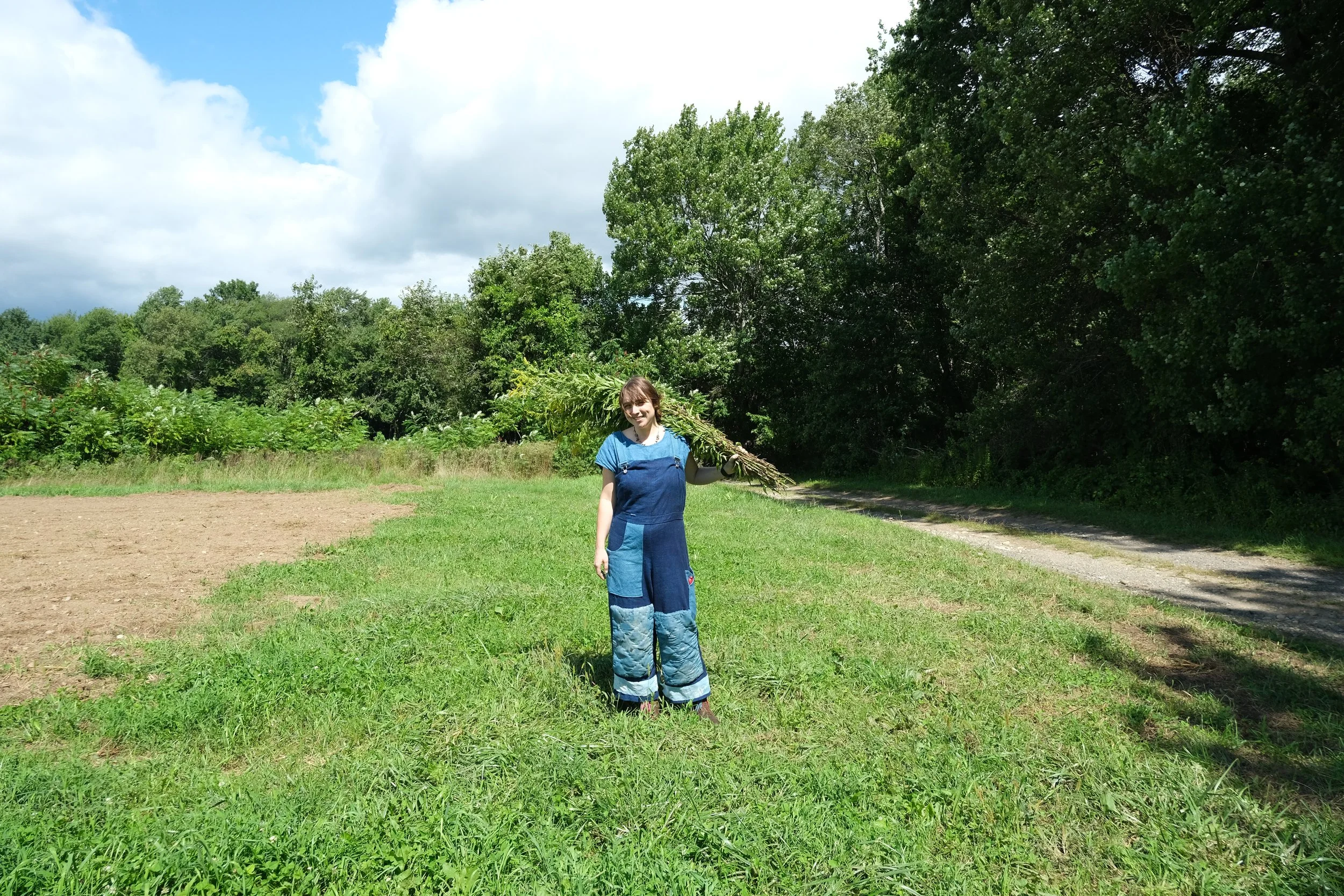
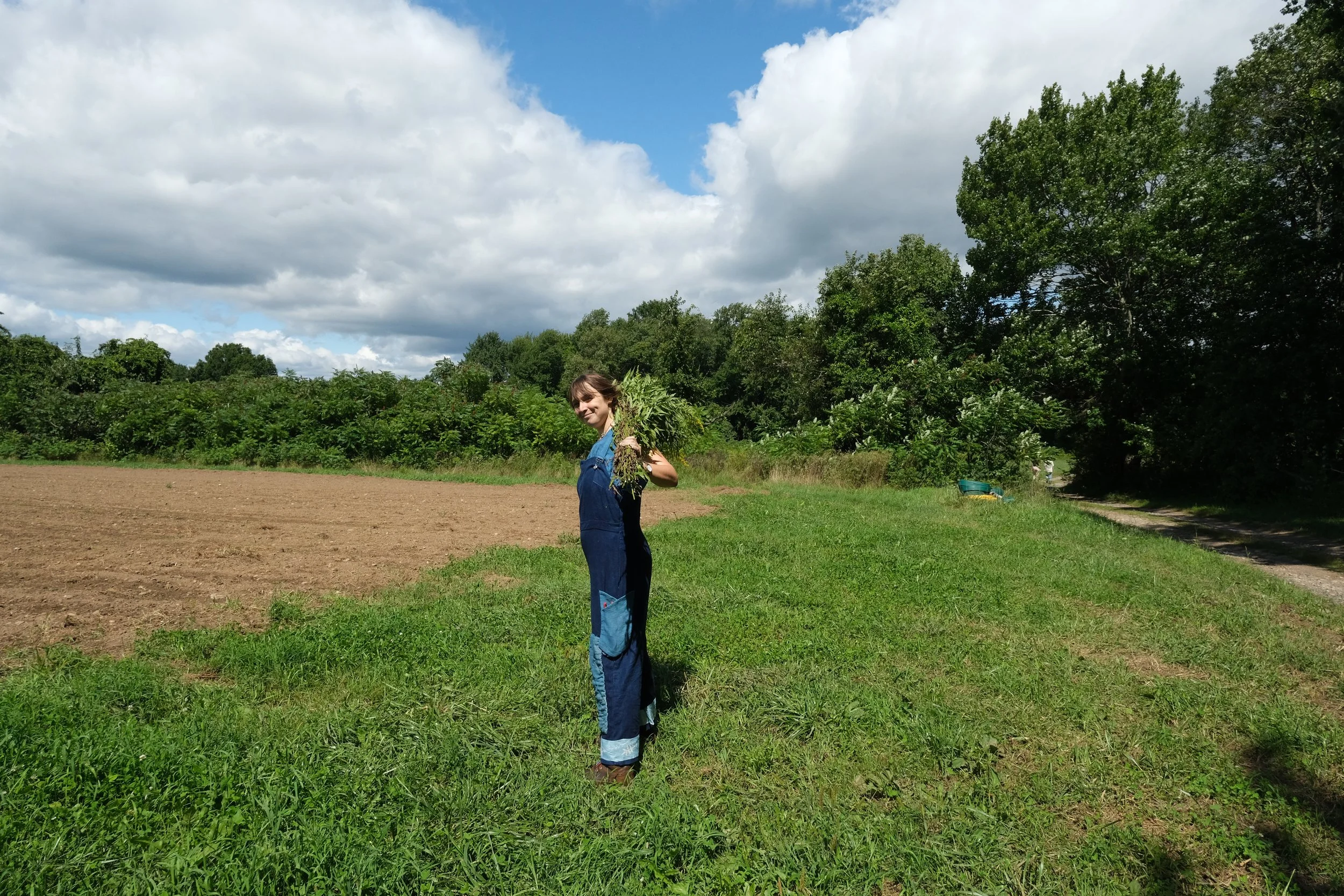
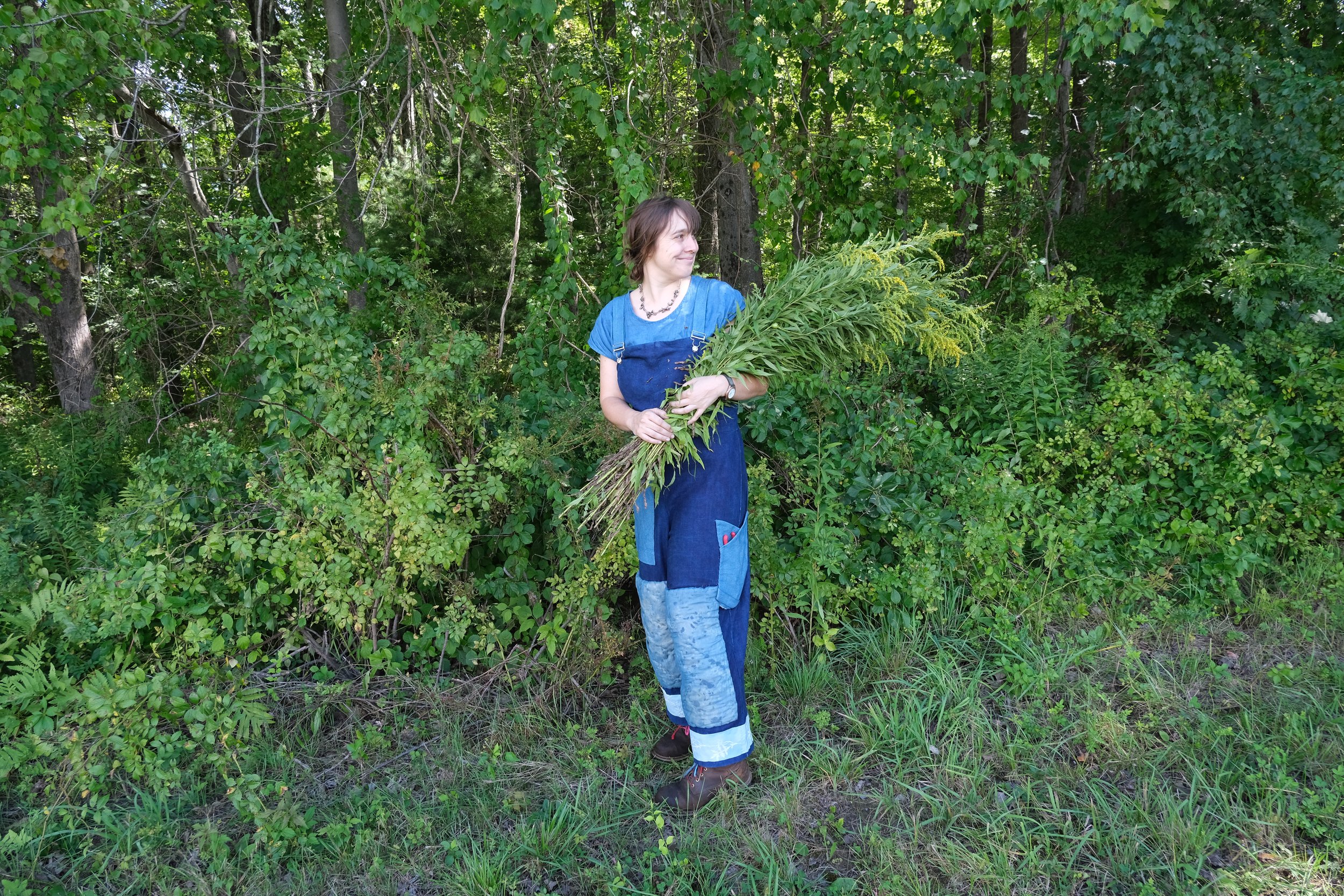
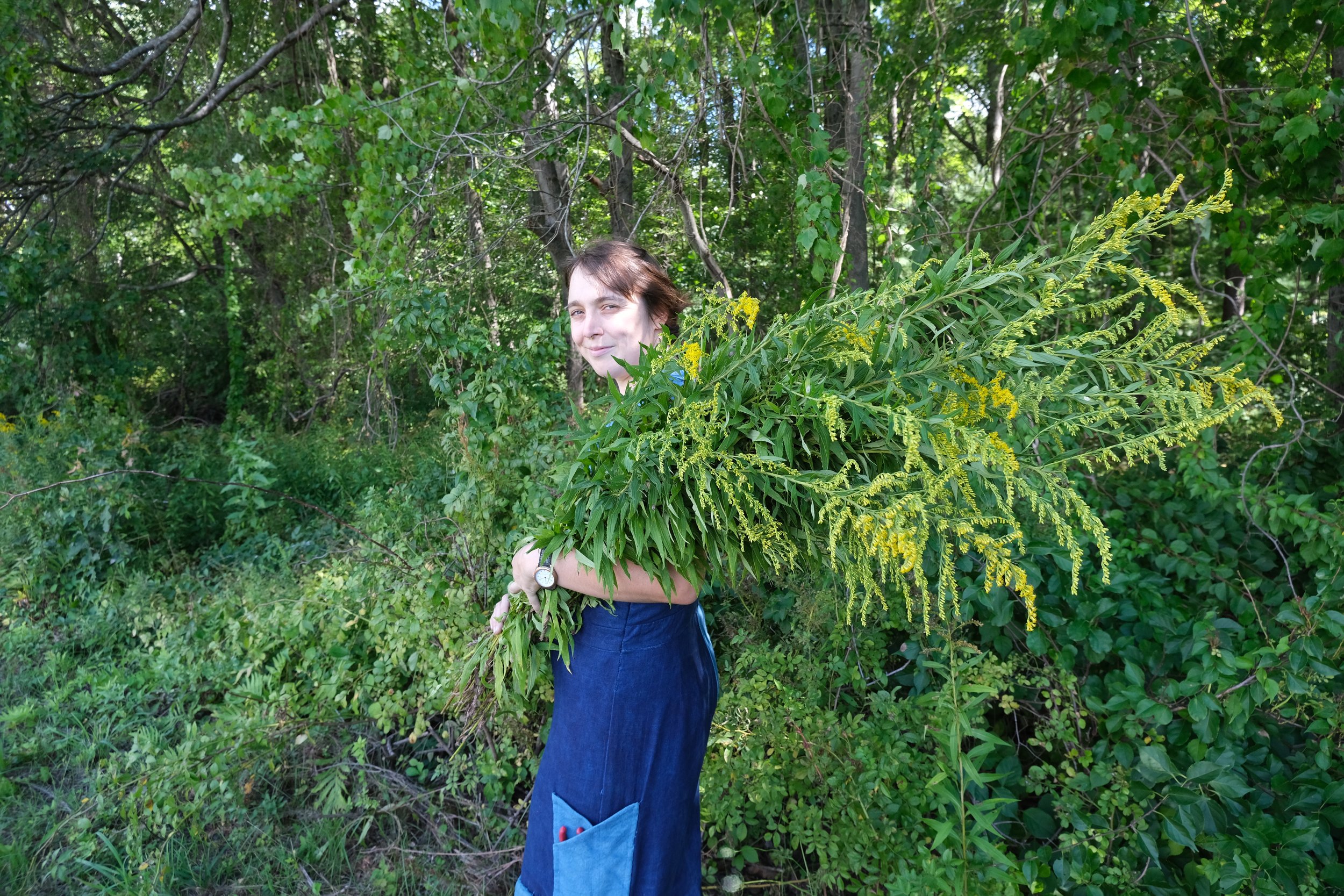
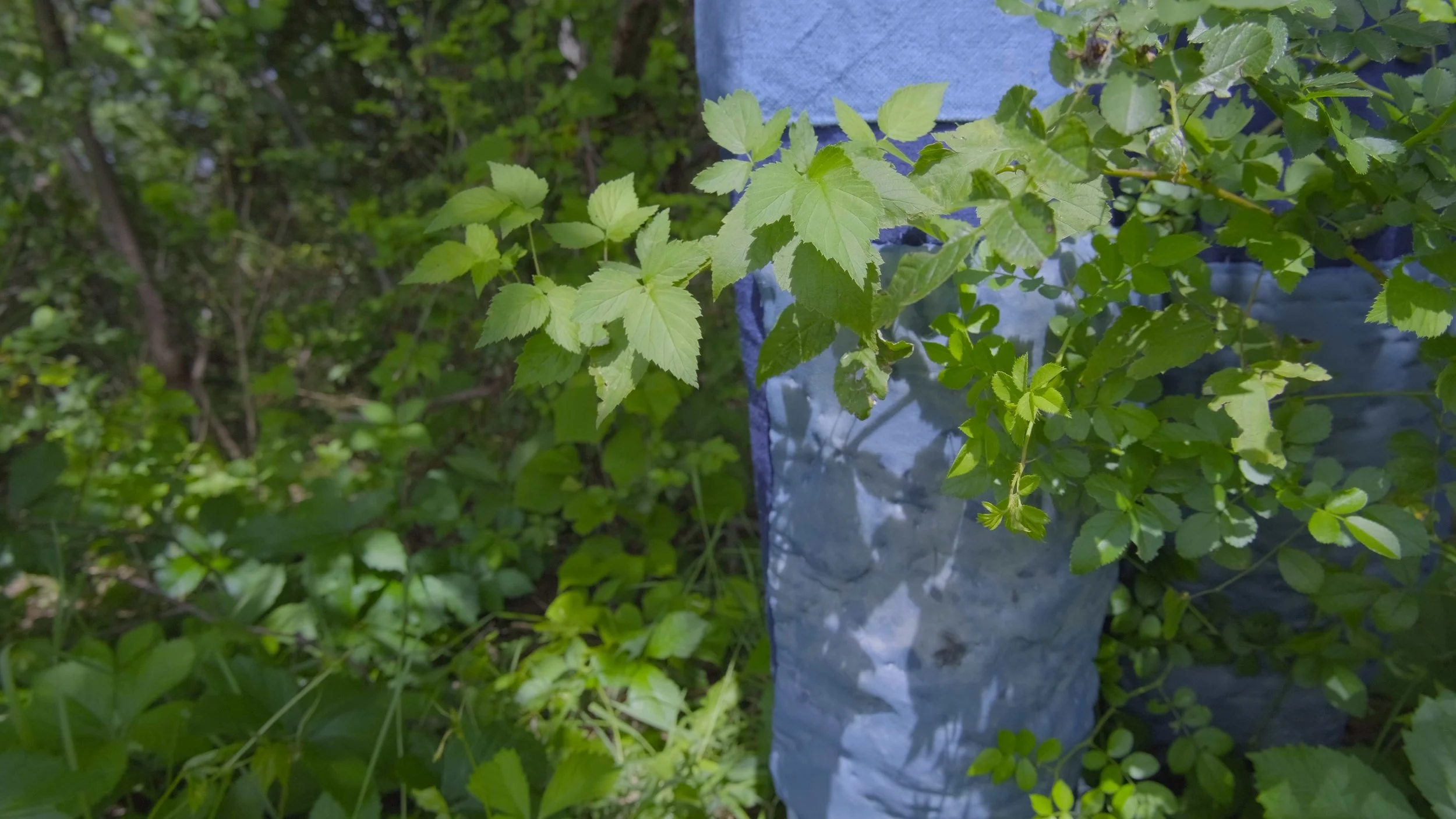
Materials: Silk dyed with fresh leaf artist grown indigo and acid rain, milkweed fluff and seeds, indigo seeds, mugwort seeds, clover seeds recycled wool interfacing, reverse twisted linen thread, cotton underdyed with mugwort, stiffened with artist made soymilk, printed in katazome style with norizome rice paste, then dipped into a fructose reduction indigo vat with artist grown and extracted pigment. Linen dyed in a fructose reduction indigo vat with indigo pigment from India, artist designed workwear pattern, boots artists own, indigo dyed bootlace.
See More at: https://climatefutures.art/2075-climate-worker-uniform